
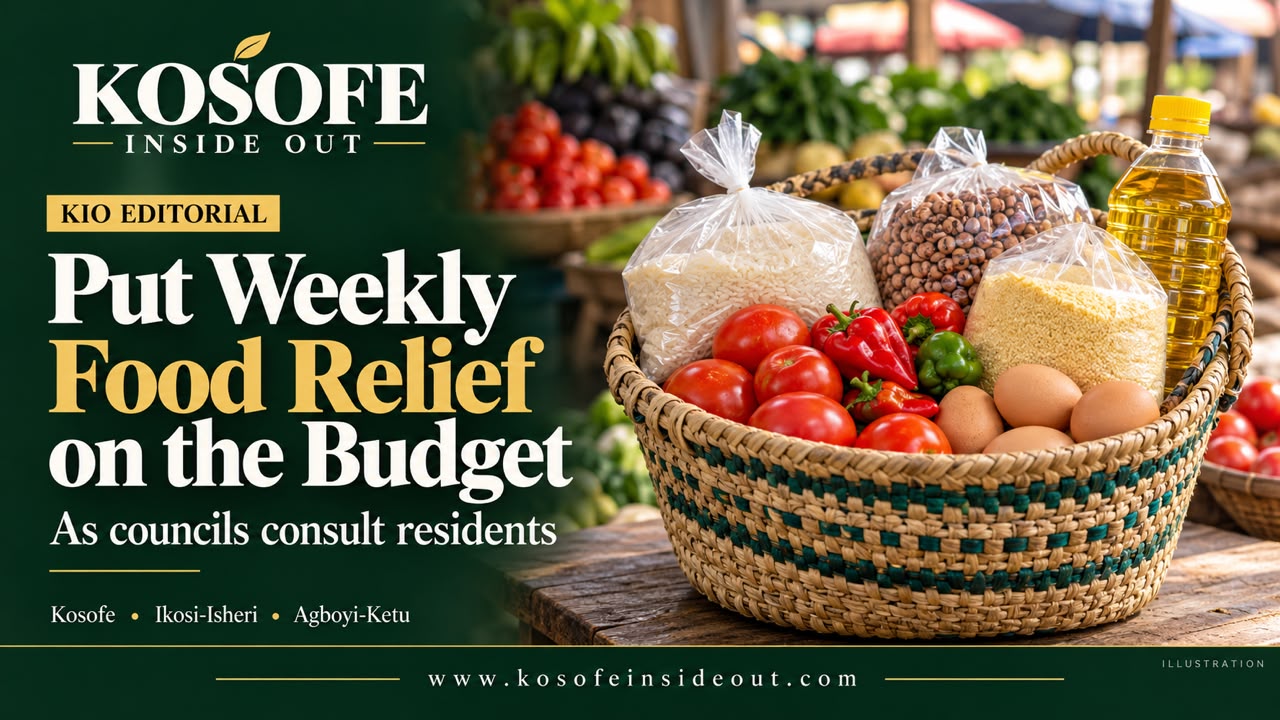
As Kosofe’s councils consult residents on their budgets, weekly food relief deserves a costed hearing. A dependable market offering essential foods at genuinely reduced prices could give households something practical to plan around—and councils a clear measure of their usefulness.
Kosofe Local Government, Ikosi-Isheri LCDA and Agboyi-Ketu LCDA should put the proposal before residents, assess its affordability and publish their decisions.
Rice, beans, garri, eggs, vegetables and cooking oil are recurring purchases. Helping households spend less on them could leave money for cooking fuel, transport and other necessities. That is a public benefit worth weighing alongside the major projects councils propose.
Make spending priorities answer to daily needs
Large projects can deliver lasting value. Their scale and price, however, do not establish that they represent the best use of public money.
Before committing substantial sums, councils should explain who benefits, how soon and why the expenditure deserves priority. Stakeholder engagement is the right setting for those questions, while choices can still influence the budget.
Residents should also be able to propose modest, recurring services whose benefits reach directly into household finances. A weekly discounted food market merits that consideration.
Build on what already exists
Food assistance is familiar territory locally. In August 2023, Kosofe council distributed food palliatives to 5,000 residents. That effort belongs in any fair account of council support.
Lagos Stae government also established the Ounje Eko discounted markets in 2024. Published locations included St Emmanuel Primary School in Ogudu, Ikosi High School in Ketu and Comprehensive Junior High School in Agboyi-Ketu. These historical arrangements do not confirm what residents can access today.
The present question is what households can depend on.
Each council should disclose its current food-support programme, expenditure, access rules and schedule. Where regular provision already exists, the assessment should examine its reach and effectiveness. Where assistance is occasional, it should consider whether a weekly service would offer better value.
The benefit of regularity is straightforward: residents can plan a purchase around a known day, location and price.
Prove the saving
A discounted market must offer a genuine advantage over neighbourhood shops and stalls. Food prices move differently across products and locations; Nairametrics’ September survey covering Mile 12 and three other Lagos markets recorded both increases and declines.
Councils therefore need current supplier quotations and a defined basket compared with nearby retail prices for the same quantities and quality. The assessment must include transport, storage, administration and any subsidy.
The saving should remain worthwhile after a resident pays to get there. Small purchase sizes matter too: households unable to afford a full bag should still benefit from accurate, affordable measures.
Local traders should have an open route to supply the scheme. Access for buyers should follow clear rules, without political connections or compulsory publicity photographs.
A weekly subsidy would create a continuing obligation. Councils must identify its funding source and explain what other expenditure would be reduced or deferred.
A time-limited pilot could test demand, actual household savings and cost. Its results should determine whether it expands. Households unable to afford even discounted food would still require targeted assistance.
Residents attending stakeholder meetings should request that the proposal be recorded for assessment. Councils should then publish whether it will enter the budget, with a cost and timetable if accepted, or reasons if rejected.
That is the commitment Kosofe Inside Out urges: record the proposal, cost it and account publicly for the decision.
Stakeholder engagement should leave residents able to trace what they said to what their council decided. This season, making food money go further deserves that clear answer.