
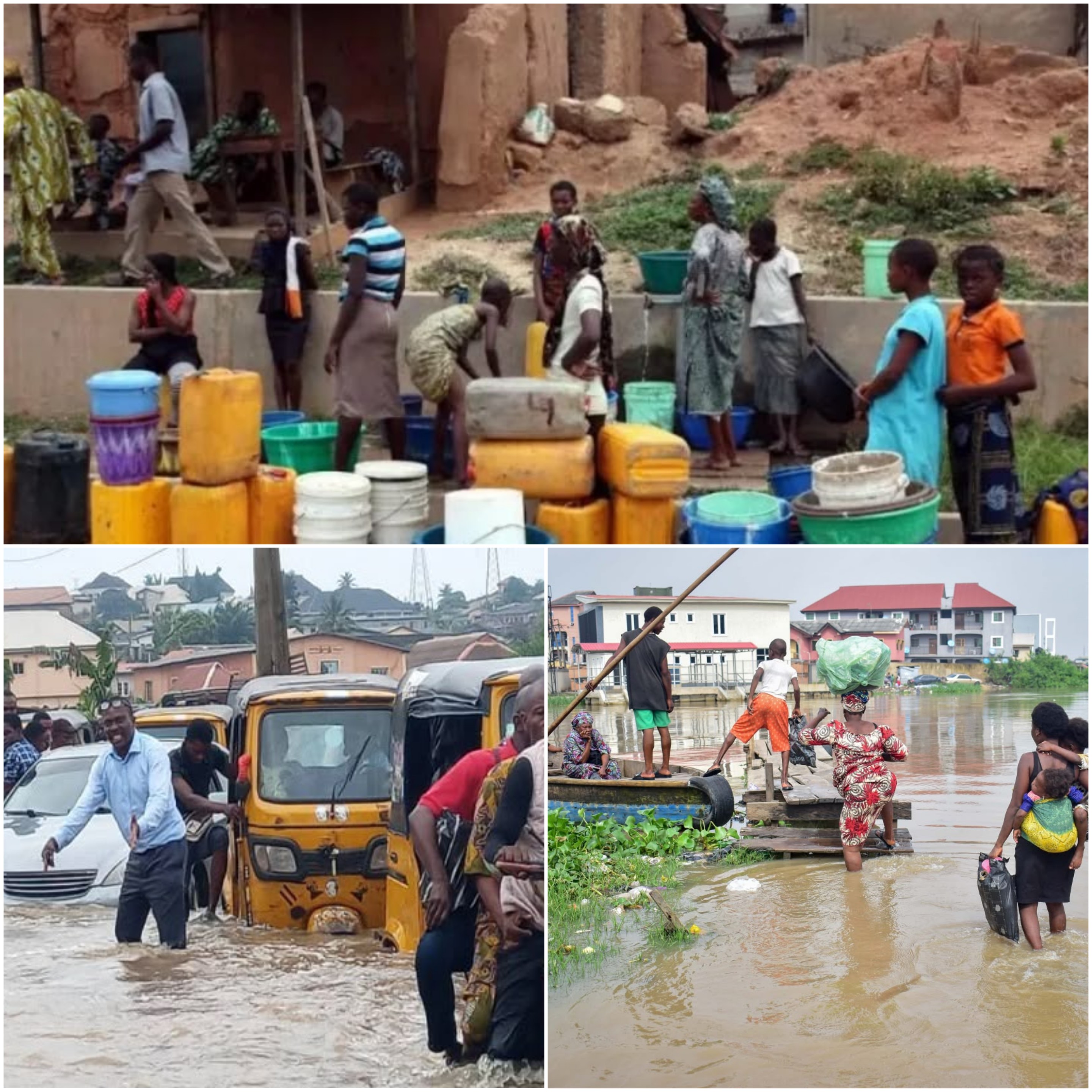
The rain in the Kosofe Federal Constituency does not merely fall; it besieges. Across the concrete expanses of Ojota, the bustling markets of Ikosi, and the riverine lowlands of Agboyi-Ketu, the sky opens up every wet season to dump billions of litres of water onto the land. Simultaneously, the Ogun River breaks its banks in a furious, brown surge, sweeping past stilt houses and waterlogged streets on its chaotic race to empty into the Atlantic Ocean.
Yet, inside a crowded tenement building in Agboyi, surrounded by a literal sea of rising water, a resident stares at an empty plastic bucket. The irony is as thick as the humid Lagos air: there is water everywhere, but not a single drop is safe to drink.
This is the daily reality for thousands of ordinary households across Kosofe LGA, Agboyi-Ketu LCDA, and Ikosi-Isheri LCDA. The floodwater licking at their doorsteps is a toxic soup of upstream agricultural chemicals, urban plastic refuse, and overflowing sewage systems. To drink it is to welcome cholera, typhoid, and dysentery.
Consequently, the common man is forced into a brutal economic paradox. To survive, residents must wade through waist-deep floods to buy 25-litre plastic jerrycans from commercial borehole vendors. In Kosofe, clean water has become an expensive commodity, a private luxury wrapped in a public crisis.
This structural tragedy was predicted decades ago by Afrobeat pioneer Fela Anikulapo-Kuti. In his blistering 1981 critique of African governance, "Original Sufferhead," Fela captured the exact structural failure that still plagues Kosofe today:
"Water underground, water overground,
Water in the air, water everywhere,
But for the average, ordinary man,
Water to drink e no dey!"
Fela’s lyrics expose the core reason for this crisis: it is not a scarcity of natural resources, but a failure of distribution and administration. Decades after those words were recorded, the multi-million naira budgets allocated for public water works have failed to yield functional household taps. The state pipe-borne water infrastructure remains broken, rusty, or entirely absent, forcing a naturally wealthy region to live like a "sufferhead."
Actionable Solutions for Kosofe Local Authorities
To break this cycle and fulfill the promises of grassroots governance, the administrations of Kosofe LGA, Agboyi-Ketu LCDA, and Ikosi-Isheri LCDA must pivot from emergency relief to permanent engineering and infrastructural updates.
1. Build Decentralised Solar-Powered Water Plants
Instead of waiting for massive, centralized state water corporations to fix the grid, local chairmen should build mini-water treatment plants across political wards.
- Powered entirely by solar energy to bypass grid unreliability.
- Utilise multi-stage filtration (sand, carbon, and UV) to treat local groundwater safely.
- Provide subsidized public water dispensing stations to crash the exploitative commercial jerrycan prices.
2. Implement Aggressive Rainwater Harvesting Initiatives
The very rain that floods Kosofe can be captured and processed before it touches the polluted ground.
- Mandate new commercial and large residential buildings to install standard roof-gutters and underground storage tanks.
- Launch a local council scheme providing low-income households with subsidized, food-grade rain-collection barrels equipped with simple, built-in chlorination and mesh filters.
3. Establish Natural Wetland Buffers and Smart Drainage
To stop the Ogun River from turning into a destructive enemy, the local councils must protect the natural environment.
- Ban all illegal sand filling and construction along the Agboyi-Ketu wetlands.
- Replace open, clogged concrete gutters with wide, subterranean eco-drainage channels that filter trash out before the water moves along.
- Plant deep-root "sponge" vegetation along vulnerable banks to naturally absorb the overflow before it enters residential zones.
4. Create Public-Private Partnerships (PPP) for Borehole Regulation
Since private boreholes currently fill the public gap, the local councils must regulate them for public safety.
- Subsidise regular water-testing kits for local commercial borehole operators to ensure the water sold to the public isn't contaminated by nearby soakaways.
- Cap the retail price of water during flood emergencies to protect the poorest citizens from price gouging.
Kosofe cannot continue to drown in floods while its people choke on thirst. It is time for the local leadership to silence Fela's tragic prophecy and prove that under local administration, safe water can finally flow into the home of the ordinary citizen.